

How Does a Spiral Mixer Improve Dough Consistency and Production Efficiency?
2026-02-03
Article Summary: A Spiral Mixer plays a critical role in modern bakeries and food production facilities by delivering consistent dough quality, efficient mixing performance, and reliable operation. This article explains how a spiral mixer works, why it addresses common production challenges, and how to select the right model for commercial and industrial use.
Outline
- Introduction to Spiral Mixers
- Common Challenges in Dough Mixing
- How a Spiral Mixer Works
- Key Technical Parameters and Specifications
- Application Scenarios and Use Cases
- Comparison with Other Mixing Equipment
- Frequently Asked Questions
- Conclusion and Contact Us
Introduction to Spiral Mixers
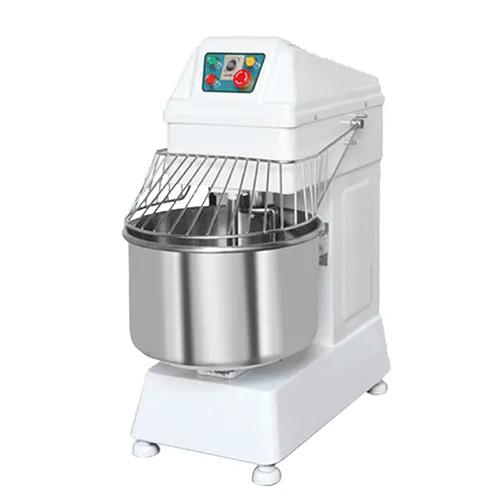
A Spiral Mixer is a specialized piece of equipment designed for professional dough preparation. It is widely used in bakeries, pizzerias, and food processing plants where consistent dough structure and controlled gluten development are essential. Unlike conventional mixers, a spiral mixer rotates both the spiral hook and the mixing bowl simultaneously, allowing ingredients to blend evenly while minimizing heat generation.
This article focuses on how spiral mixers solve common operational pain points, such as inconsistent dough texture, excessive mixing time, and production bottlenecks. It also explains why many professionals rely on spiral mixers to maintain product quality across large-scale operations.
Common Challenges in Dough Mixing
Dough preparation presents several challenges in commercial environments. Inconsistent hydration, uneven gluten development, and overheating during mixing can negatively affect final product quality. These issues often result in unpredictable fermentation, poor texture, and reduced shelf stability.
Traditional planetary mixers may struggle to handle high-capacity dough batches or dense formulations. Overmixing can damage gluten structure, while undermixing leads to poor elasticity. A spiral mixer is specifically engineered to address these challenges by maintaining optimal mixing conditions throughout the process.
How a Spiral Mixer Works
A spiral mixer operates using a fixed or removable bowl combined with a spiral-shaped agitator. The bowl rotates in one direction while the spiral hook rotates in another, ensuring continuous folding and stretching of the dough. This dual-motion system allows ingredients to blend thoroughly without excessive friction.
By keeping the dough mass in constant motion, a spiral mixer promotes uniform hydration and controlled gluten formation. The reduced friction also helps maintain lower dough temperatures, which is critical for yeast activity and fermentation control in professional baking.
Key Technical Parameters and Specifications
| Parameter | Description |
|---|---|
| Bowl Capacity | From small batches to large-capacity industrial volumes |
| Mixing Speed | Single-speed or dual-speed options for flexible processing |
| Drive System | Heavy-duty motor designed for continuous operation |
| Construction Material | Food-grade stainless steel for hygiene and durability |
| Temperature Control | Low heat generation to protect dough quality |
| Safety Features | Protective guards and emergency stop mechanisms |
Application Scenarios and Use Cases
Spiral mixers are commonly used in artisan bakeries, industrial bread production lines, pizza chains, and pastry workshops. Their ability to handle heavy dough loads makes them suitable for bread, bagels, pizza dough, and other yeast-based formulations.
In high-volume production environments, a spiral mixer helps standardize output quality while reducing labor intensity. For smaller bakeries, it offers precise control over mixing parameters, enabling consistent results across different recipes and batch sizes.
Comparison with Other Mixing Equipment
Compared with planetary mixers, spiral mixers are better suited for dough-intensive applications. Planetary mixers offer versatility for various food preparations, but they may introduce excessive heat and uneven mixing when handling dense dough.
Spiral mixers focus exclusively on dough preparation, delivering superior gluten development and consistency. This makes them the preferred choice for professionals who prioritize dough performance and repeatability.
Frequently Asked Questions
What types of dough are best suited for a spiral mixer?
Spiral mixers are ideal for yeast-based doughs such as bread, pizza, and buns. Their design ensures even hydration and controlled gluten development, which are essential for these applications.
Can a spiral mixer handle continuous production?
Yes, spiral mixers are designed for continuous and heavy-duty operation. Their robust motors and efficient mixing action support extended use in commercial and industrial settings.
How does a spiral mixer help control dough temperature?
The dual-rotation mechanism minimizes friction during mixing. This reduces heat buildup, helping maintain optimal dough temperature and improving fermentation consistency.
Is maintenance complicated for spiral mixers?
Routine maintenance is straightforward and typically involves cleaning the bowl and spiral hook, checking mechanical components, and ensuring proper lubrication. Stainless steel construction simplifies hygiene management.
Conclusion and Contact Us
A Spiral Mixer is a vital investment for any operation that values consistent dough quality, efficient production, and long-term reliability. By addressing common mixing challenges and offering precise control over the dough development process, spiral mixers support both productivity and product excellence.
SYBO provides professional spiral mixer solutions designed to meet the demands of modern bakeries and food manufacturers. To learn more about available models or to discuss specific application requirements, contact us today and explore how the right spiral mixer can enhance your production performance.