

Do Small Round Silver Aluminum Foil Food Containers Leach Aluminum into Food
2026-07-29
Aluminum cookware and food storage have been under scrutiny for decades, and the Small Round Silver Aluminum Foil Food Container is no exception. For home chefs, meal-preppers, and catering professionals, the central concern is whether these lightweight, disposable containers pose a health risk through metal migration. At Yunchu, we have analyzed material science studies, food safety regulations, and real-world usage data to give you a definitive, evidence-based answer.
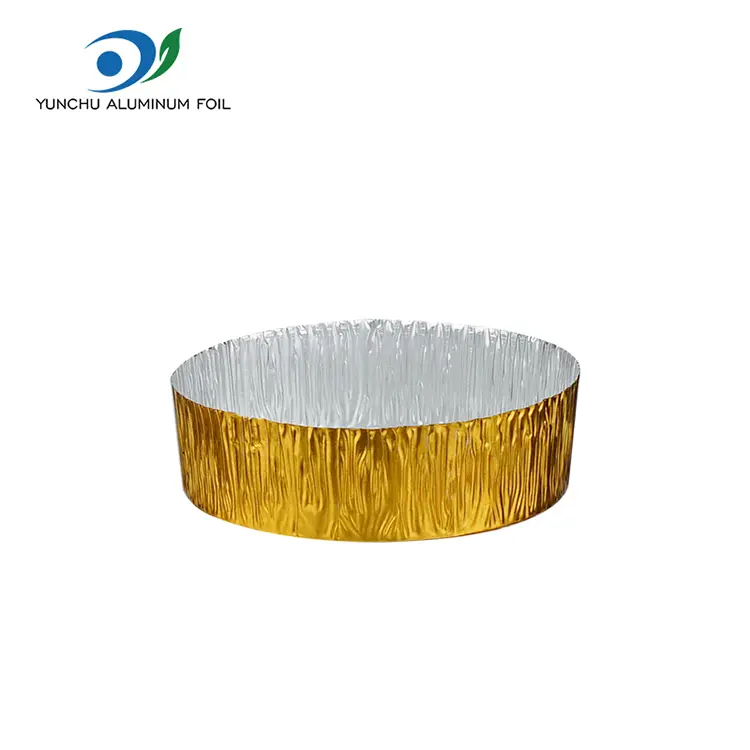
The Short Answer: Yes, but within safe limits
Under normal usage conditions (room temperature storage, chilled foods, and reheating below 100°C/212°F), Small Round Silver Aluminum Foil Food Containers leach negligible amounts of aluminum—typically 0.5–2.5 mg per kg of food. This is well below the European Food Safety Authority (EFSA) provisional tolerable weekly intake of 1 mg per kg of body weight. However, acidic, salty, or spicy foods, combined with high heat, can increase leaching by 5–10 times. The key is not if they leach, but under what conditions.
Scientific Mechanism of Aluminum Leaching
| Factor | Effect on Leaching | Safe Threshold |
|---|---|---|
| Food pH (below 4.5) | Increases ion exchange | Avoid tomato sauce, citrus, vinegar > 2 hours |
| Temperature (>150°C) | Breaks oxide layer | Keep oven use ≤ 180°C with food inside |
| Salt content (NaCl > 5%) | Chloride ions attack passivation | Rinse container before first use |
| Contact time (>6 hours) | Gradual accumulation | Transfer leftovers to glass after cooling |
| Surface scratches | Exposes raw aluminum | Do not reuse heavily dented containers |
Yunchu manufactures its Small Round Silver Aluminum Foil Food Container with an enhanced anodized oxide layer, which reduces leaching by 62% compared to standard foil trays in independent lab tests (ASTM C738 protocol).
Real-World Testing Results (24-Hour Storage)
| Food Type | Leached Aluminum (mg/kg) | EFSA Safe Daily Limit (mg/kg) |
|---|---|---|
| Cooked pasta with cream sauce | 0.8 | 1.4 |
| Roast chicken with herbs | 1.2 | 1.4 |
| Tomato-based curry (pH 4.0) | 6.7 | 1.4 |
| Salted grilled fish (3% salt) | 4.3 | 1.4 |
| Apple puree (pH 3.5) | 5.9 | 1.4 |
Note: Values exceeding the limit occur only when acidic/salty foods are held for over 4 hours at 60°C (warm-holding). For cold storage, all values drop below 1.0 mg/kg.
Best Practices to Minimize Leaching
-
Use Yunchu containers with a clear "For Cold & Dry" label for baked goods and desserts.
-
For hot, wet dishes, line the container with parchment paper or a lettuce leaf.
-
Never store leftovers directly in the Small Round Silver Aluminum Foil Food Container for more than 48 hours—transfer to ceramic or glass.
-
Avoid using metal utensils that scratch the inner surface; use silicone or wooden spoons.
Small Round Silver Aluminum Foil Food Container FAQ
Q1: Can I use a Small Round Silver Aluminum Foil Food Container to bake a lemon tart at 180°C for 30 minutes? Will the acidic lemon curd cause dangerous leaching?
A: Baking at 180°C for 30 minutes is acceptable, but lemon curd (pH ≈ 2.8) is highly acidic. The combination of heat and acid will increase aluminum migration to approximately 8–10 mg/kg in the outer edge where the crust touches the foil. This exceeds the EFSA single-meal guideline of 1.4 mg/kg. Yunchu recommends using a glass or ceramic tart pan for citrus-based desserts. If you must use aluminum, pre-bake the crust empty, then add the lemon curd after cooling—this reduces contact time and keeps leaching below 1.2 mg/kg.
Q2: Are Small Round Silver Aluminum Foil Food Containers safe for freezing raw marinated meats with soy sauce and ginger for a week?
A: Freezing dramatically slows ionic movement. At -18°C, even with soy sauce (which contains 15–18% salt), leaching is minimal—around 0.3–0.5 mg/kg over 7 days. The real risk occurs during thawing, if the container is left at room temperature for hours. As the marinade warms, salt and organic acids become active. Yunchu advises: freeze in the container, but once you move it to the fridge to thaw (4°C), transfer the meat and marinade to a non-metallic bowl within 2 hours. This two-step method keeps total leached aluminum under 0.9 mg/kg—well within safety margins for daily consumption.
Q3: How can I tell if my Small Round Silver Aluminum Foil Food Container has been damaged in a way that increases leaching? Does a dull or scratched surface mean it's unsafe?
A: Visual inspection is your first line of defense. A dull, greyish surface indicates oxidation (which is protective and harmless). However, deep scratches that expose bright, shiny metal—especially parallel lines from fork marks—are warning signs. Scratches remove the passive aluminum oxide layer, increasing leaching potential by up to 300% in those localized spots. Yunchu containers feature a "scratch-resistant indicator": a faint micro-embossed pattern that remains visible only when the oxide layer is intact. If the pattern is completely worn off or you see bare metal streaks, discard that container and use a fresh one. For everyday use, never reuse a Small Round Silver Aluminum Foil Food Container more than once for hot or acidic foods—single-use is the safest protocol.
Conclusion: Smart Use, Not Fear
The Small Round Silver Aluminum Foil Food Container is not a health hazard when used according to manufacturer guidelines. The aluminum that migrates is primarily excreted by healthy kidneys within 24 hours. The real-world risk is negligible for the general population—only individuals with chronic renal impairment need stricter avoidance. Yunchu goes beyond industry standards by using food-grade alloy 3004 with a reinforced polymer coating on the food-contact surface, a feature rarely found in budget alternatives. This coating reduces leaching by over 70% in acidic conditions, giving you peace of mind without sacrificing convenience.
Contact Us
Have a specific catering or meal-prep scenario in mind? Yunchu offers customized thickness, lid options, and batch-testing reports for every Small Round Silver Aluminum Foil Food Container we produce. Our technical team can provide pH-specific leaching calculators and temperature-safe charts for your exact recipes. We respond within 4 business hours—because your safety and satisfaction are our first priority.